
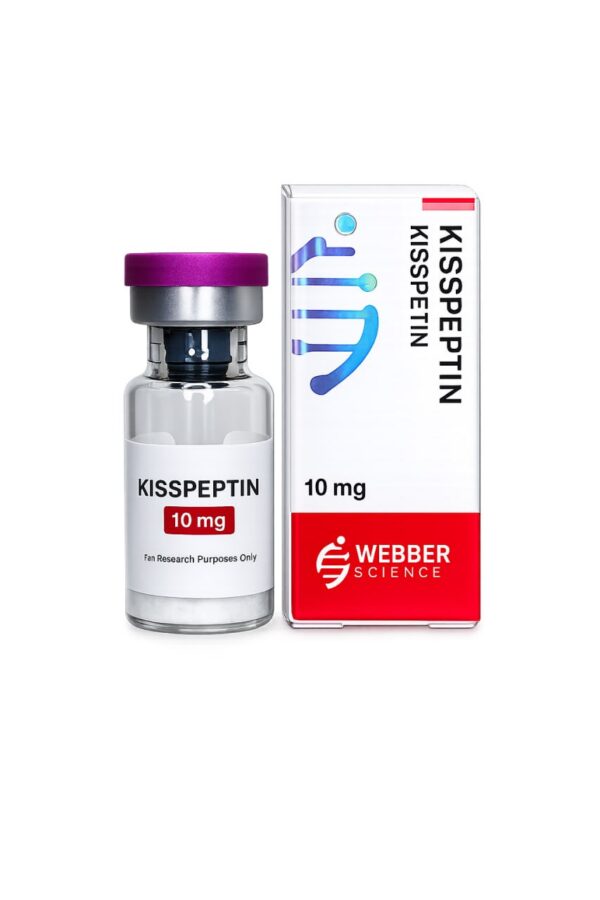
Kisspeptin 10mg — GnRH Activator | Reproductive Endocrinology Research Compound
Kisspeptin (also referred to as Kisspeptin-10 or metastin) is an endogenous neuropeptide encoded by the KISS1 gene and the principal activator of gonadotropin-releasing hormone (GnRH) neurons in the hypothalamus. By binding to its cognate receptor KISS1R (GPR54), Kisspeptin triggers a downstream cascade that governs pulsatile GnRH secretion, LH and FSH release, and overall hypothalamic-pituitary-gonadal (HPG) axis activity. It has become one of the most widely studied signaling molecules in reproductive biology and neuroendocrinology.
Research Background
The discovery that loss-of-function mutations in KISS1R result in idiopathic hypogonadotropic hypogonadism established Kisspeptin as a non-redundant gate-keeper of reproductive competence. Subsequent research has expanded its known roles to include puberty onset timing, negative and positive feedback regulation of gonadal steroids, seasonal breeding patterns, and metabolic-reproductive crosstalk. Researchers also investigate Kisspeptin in the context of libido and sexual motivation, given KISS1R expression in limbic brain regions and evidence from both rodent and primate models linking Kisspeptin signaling to sexual behavior.
Key Research Areas
- HPG axis regulation: Characterizing pulsatile GnRH/LH release dynamics using Kisspeptin as a pharmacological probe in in vivo and ex vivo hypothalamic preparations
- Reproductive endocrinology: Studying mechanisms of puberty onset, ovulation triggering, and hypogonadotropic hypogonadism models
- Sexual behavior & motivation: Investigating KISS1R-mediated signaling in limbic circuits and its contribution to pro-sexual CNS pathways in rodent models
- Metabolic-reproductive axis: Examining how energy status signals (leptin, insulin, ghrelin) converge on Kisspeptin neurons to modulate fertility
- Oncology: Exploring the original metastasis-suppressor role of KISS1 in tumor biology, particularly in melanoma and breast cancer models
Product Specifications
- Compound: Kisspeptin-10 (human sequence: Tyr-Asn-Trp-Asn-Ser-Phe-Gly-Leu-Arg-Phe-NH₂)
- Quantity: 10 mg per vial
- Form: Lyophilized powder
- Purity: ≥98% (HPLC)
- Storage: Store at −20°C, protected from light and moisture
- Reconstitution: Reconstitute in sterile water or acetic acid (0.1–1%) per standard laboratory protocol
Frequently Asked Questions
What is Kisspeptin’s role in the HPG axis?
Kisspeptin neurons in the arcuate nucleus (KNDy neurons, co-expressing neurokinin B and dynorphin) generate the pulsatile GnRH signal that drives LH and FSH secretion from the anterior pituitary. This makes Kisspeptin the proximate upstream trigger of the entire reproductive hormonal cascade. Researchers use exogenous Kisspeptin to stimulate or probe this axis with high specificity.
How does Kisspeptin differ from other reproductive research peptides like PT-141?
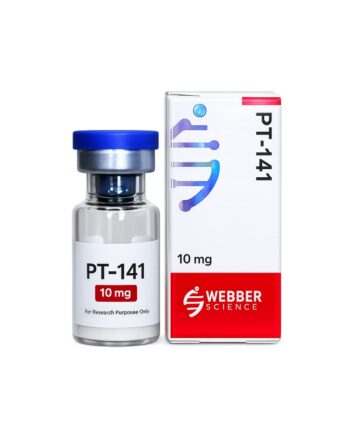
PT-141 (bremelanotide) acts centrally on melanocortin receptors to enhance sexual arousal signaling. Kisspeptin operates upstream at the neuroendocrine level — modulating GnRH pulsatility and gonadotropin secretion rather than direct dopaminergic/melanocortinergic arousal circuits. The two compounds are mechanistically distinct and complement each other in HPG axis research models.
What concentration is appropriate for in vitro work?
Typical in vitro concentrations range from 1 nM to 1 µM depending on the cell line, assay endpoint, and receptor expression level. Researchers should determine optimal concentrations empirically based on their specific experimental system.
Is this product intended for human use?
No. Kisspeptin is sold strictly for in vitro and in vivo laboratory research use only. It is not approved for human or veterinary administration, and Webber Science makes no claims regarding its safety or efficacy in humans.
This product is intended for research purposes only. Not for human or veterinary use. Must be handled by qualified researchers in accordance with applicable regulations.


Reviews
There are no reviews yet.