
Peptide 101: New to Peptides? Start Here
New to peptides? Start here. A comprehensive guide covering what peptides are, how they work, what the research says, and how to evaluate suppliers. Written for Canadians.
This website sells research materials for laboratory use only. You must be at least 21 years old to enter.
We're sorry. You must be at least 21 years old to access this site.

WebberScience research updates cover catalog documentation, compound terminology, laboratory-model interpretation and changes affecting the research-material landscape. Articles separate mechanistic observations from clinical claims, identify the model being discussed and link readers to relevant product or research-guide pages. All materials are presented for laboratory research context only and are not intended for human or veterinary use.
New to peptides? Start here. A comprehensive guide covering what peptides are, how they work, what the research says, and how to evaluate suppliers. Written for Canadians.
Complete guide for Canadian researchers on CJC-1295 peptides, covering DAC vs no-DAC differences, wellness applications, dosing protocols, storage guidelines, and Canadian regulatory considerations.
What Is GHK-Cu? GHK-Cu (glycyl-L-histidyl-L-lysine copper) is a naturally occurring copper peptide complex found in human blood, saliva, and urine. First isolated in 1973 by Dr. Loren Pickart, this tripeptide has become one of the most researched peptides for skin…
When shopping for wellness peptides, you’ll see purity percentages everywhere: 99%, 98%, 95%. But what do these numbers actually mean? Is 99% purity really that much better than 95%? And how can you verify what you’re buying? Understanding peptide purity…
Canadian researchers exploring peptide-based studies have increasingly turned their attention to BPC-157, a synthetic peptide that has garnered significant interest in the scientific community. This guide provides essential information for researchers considering BPC-157 for their laboratory work. This article is…
Your comprehensive guide to understanding Epithalon peptide research, benefits, protocols, and sourcing in Canada. What is Epithalon? Epithalon (also known as Epitalon or Epithalamin) is a synthetic tetrapeptide consisting of four amino acids: Alanine, Glutamic Acid, Aspartic Acid, and Glycine.…
What Is GHK-Cu? GHK-Cu (glycyl-L-histidyl-L-lysine-copper) is a naturally occurring copper peptide complex found in human blood plasma, saliva, and urine. First identified in the 1970s, this tiny three-amino-acid chain bound to a copper ion plays a significant role in wound…
What Is TB-500? TB-500, also known as Thymosin Beta-4 (TB-4), is a synthetic version of a naturally occurring peptide found in human and animal cells. It plays a key role in tissue repair, inflammation reduction, and cell migration — making…
BPC-157 Complete Canadian Guide: What You Need to Know in 2025 If you’ve been researching peptides for recovery and healing, you’ve probably heard about BPC-157. This guide will walk you through everything Canadian residents need to know about this compound,…
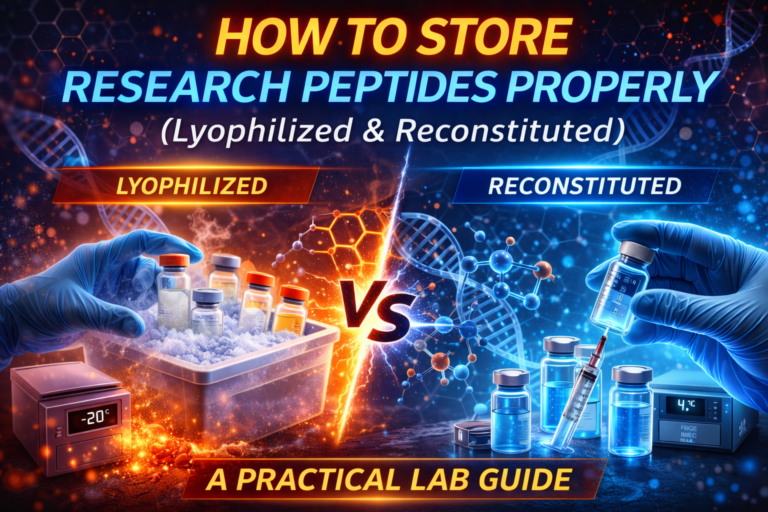
Learn best practices for storing wellness peptides—temperature, light, moisture, freeze–thaw handling, aliquots, and labeling to protect sample integrity.