
GLP-3 (Ret) Compassionate Use in 2026: What It Means for Research

What retatrutide compassionate use means, why it is not FDA approval, how Canada's Special Access Program differs, and what researchers should know.
This website sells research materials for laboratory use only. You must be at least 21 years old to enter.
We're sorry. You must be at least 21 years old to access this site.

Retatrutide research updates track terminology, trial reporting and model-specific evidence concerning the compound commonly described as a GLP-1, GIP and glucagon receptor agonist. Articles distinguish published findings from commercial-lot identity and avoid extending observations beyond the reported methods. See the Retatrutide research hub for a current starting point. For laboratory research use only. Not for human or veterinary use.
What retatrutide compassionate use means, why it is not FDA approval, how Canada's Special Access Program differs, and what researchers should know.
Retatrutide safety research in 2026: side effects, BMJ death headline context, evidence limits, comparisons, and research-only FAQ.
GLP-1 Parkinson’s disease research: 2026 meta-analysis, semaglutide neuroprotection, comparisons, evidence limits, and FAQ.
Retatrutide osteoarthritis research: TRIUMPH-1 joint findings, weight-bearing tissue questions, comparisons, evidence limits, and FAQ.
Retatrutide research trends, BPC-157 product highlight, and a study-design tip for peptide literature review.
Retatrutide trial results 2026: BMJ triple-agonist research, comparison with semaglutide, evidence limits, and research FAQ.
Retatrutide cognitive effects research in 2026: new learning and memory study, mechanism context, comparisons, and research-only FAQ.
Subject: GLP-3 (Ret) Research Update: GLP-1 Trends GLP-3 (Ret) continues to stand out as one of the most closely watched metabolic research compounds in the current peptide landscape. In recent trend monitoring, GLP-3 (Ret) showed strong year-over-year search growth and…
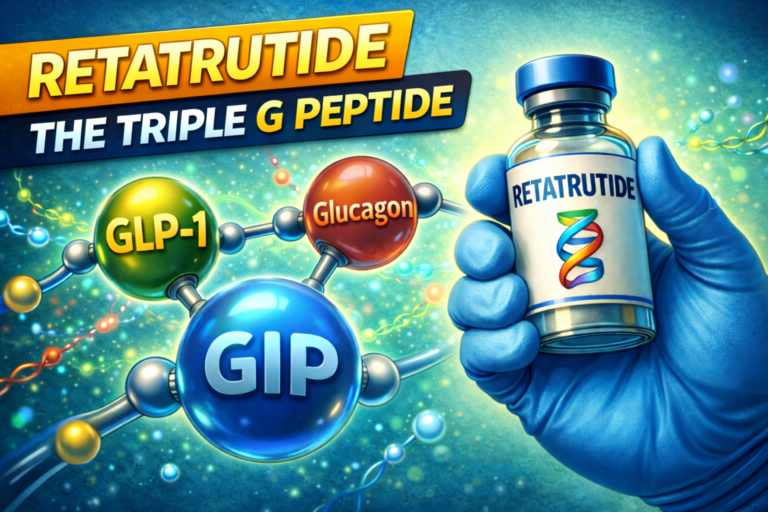
GLP-3 (Ret) is an advanced triple-agonist research peptide designed to activate GLP-1, GIP, and glucagon receptors simultaneously. In this video, we break down what GLP-3 (Ret) is, how it works, and why it’s generating so much interest in metabolic…